



sales@information-display.com
0086-755-26160419
Displays, as the sole medium for most users to interact with computers for visual purposes, have undergone several rounds of evolution over the years. From the earliest cathode ray tubes (CRTs) to TN LCDs, then IPS panels, and now OLED screens, the market is incredibly diverse.
Recently, display panel giants Samsung and LG have both introduced next-generation OLED panel solutions, focusing on a return to traditional sub-pixel arrangements to improve text display.
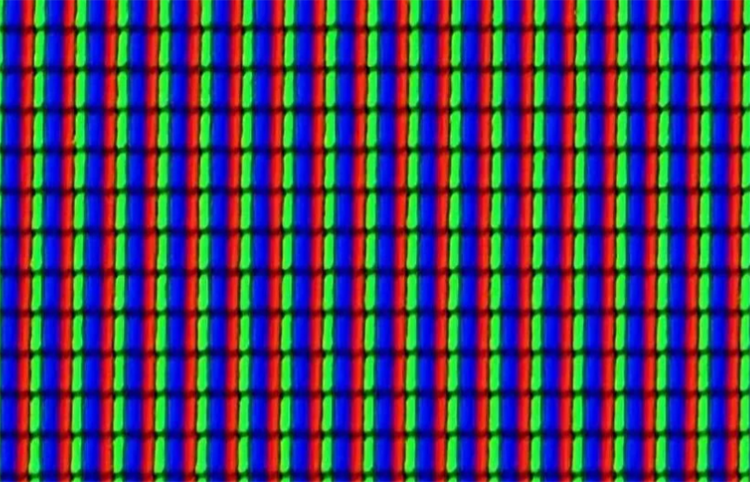
Samsung has introduced a new generation of pixel arrangement technology called V-Stripe. While still based on blue OLED with a quantum dot conversion film, the three RGB sub-pixels are arranged in vertical stripes and horizontally distributed, similar to the stripe layout of traditional LCDs. A monitor using this panel, the HP HyperX Omen OLED 34, was showcased at CES 2026, and according to attendees, the text display was indeed clearer.
https://www.information-display.com/Products.html
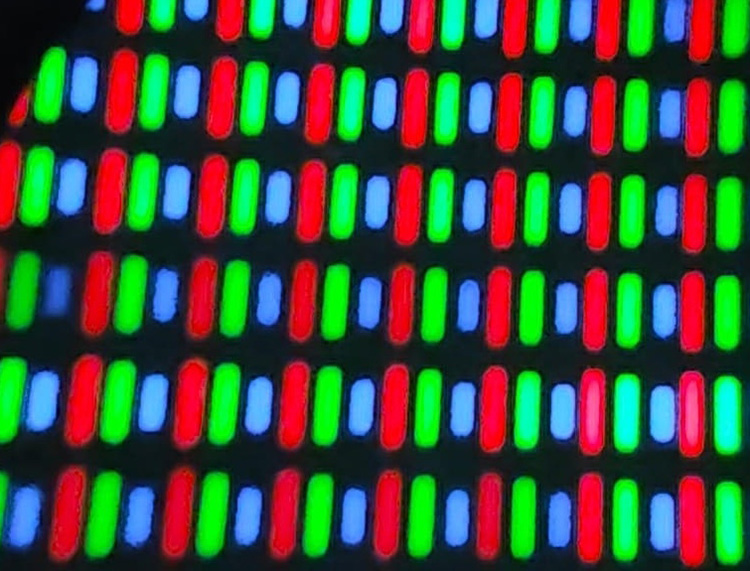
LG, on the other hand, has introduced a new technology called RGB Stripe, which uses white OLEDs and color filters. The arrangement removes the interference of white subpixels on RGB colors, and also uses a vertical stripe arrangement, significantly improving text display. It is reportedly already used in ASUS ROG monitors and will be available soon.
For gamers, OLED monitors are arguably the most suitable display technology for gaming. Its core principle is based on pixel self-emissive technology, where each pixel can be directly driven by current, unlike traditional LCD screens which rely on molecular deflection. Therefore, OLED screens have a significant advantage in response latency. Furthermore, OLED monitors can completely turn off pixels when displaying black, achieving physical-level pure black, thus eliminating the backlight leakage problems of LCDs. These advantages have made OLED panels increasingly popular among gamers.
However, aside from gaming, the currently available Samsung QD-OLED and LG WOLED models are slightly lacking in office text processing. Samsung uses a red-green-blue triangular arrangement, while LG uses a single row of red, green, blue, and white pixels. Therefore, this unconventional arrangement results in a lack of clarity compared to traditional LCD monitors, leading to blurred text edges and the appearance of color fringing. This is the main solution Samsung and LG are addressing with their new panels.
Overall, while Samsung and LG differ slightly in their underlying technology for the new panels, both have opted for a vertical stripe arrangement to achieve better text display and strive for universal compatibility. This also signifies that OLED displays are moving towards a balanced display solution that caters to both gaming and office experiences, aiming for broader application areas and market coverage.

Contact: Doris Chen
Phone: 18025359608
E-mail: sales@information-display.com
Whatsapp:0086-18025359608
Add: Floor 5, No. 1 bldg, Mingrenju Industrial Park, Rongyun Road, Kengzi Street, Pingshan District, Shenzhen, China