



sales@information-display.com
0086-755-26160419
When it comes to buying a TV, many people's first thought is: domestic brands are cheap and good.
That's true. In the large-screen LCD TV market, Chinese companies have indeed become unrivaled. Six of the world's top ten TV brands are Chinese, with a combined market share exceeding 70%. Japanese brands have long since declined, and American and European brands are no match. Only South Korea's Samsung and LG can still compete with us.
However, if you shift your focus to the high-end OLED TV market, the situation is completely reversed. In this area, Chinese brands have a pitifully small market share.
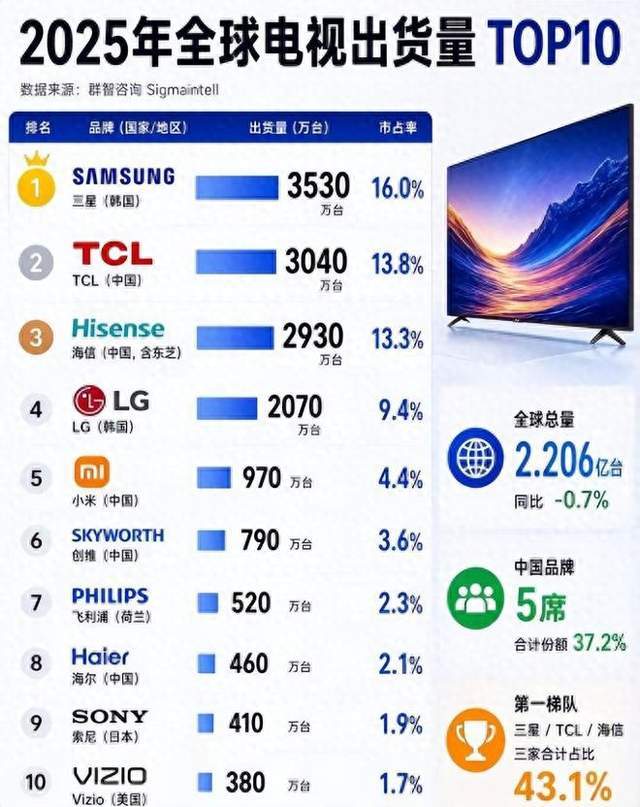
Let's look at some figures. According to Omdia's statistics, in the first quarter of 2026, a total of 1.5 million OLED TVs were sold globally. LG alone sold 760,000 units, accounting for a market share of 50.5%, firmly holding the top spot. Samsung came in second, shipping 536,000 units, accounting for 35.7%. Together, these two companies have captured over 86% of the market share.
Of the remaining less than 14%, Sony accounts for approximately 5% to 6%, followed by Chinese brands like Hisense, TCL, and Xiaomi. Even combined, their share is less than 10%.
In other words, for every 10 high-end OLED TVs sold, roughly 9 are from LG and Samsung, and of the remaining one, the majority is from Sony, leaving Chinese companies with only a tiny slice.
This is quite interesting. These are Chinese brands that can easily outperform Samsung and LG in the mainstream LCD TV market, so why are they lagging far behind in the high-end OLED market?
The reason isn't hard to understand.
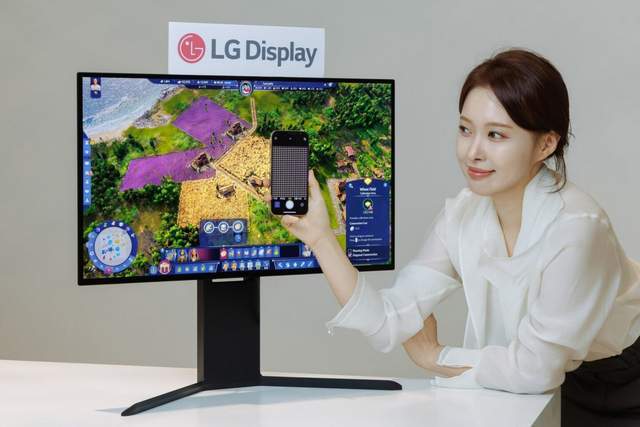
First, and most importantly—the screen market is a bottleneck. Large-size OLED panels have been essentially monopolized by LG for many years. If domestic companies like Hisense, TCL, and Xiaomi want to produce OLED TVs, they mostly have to buy screens from LG. Imagine, your core component is controlled by your competitor; you have no say in the price, delivery time, or quantity. How can this battle be fought?
Second, the time difference is too great. LG and Samsung have been cultivating the OLED field for over a decade, and their technological accumulation, production line layout, and supply chain management are far more mature than those of Chinese companies. Chinese companies have only entered the OLED TV market on a large scale in the last three to five years; their production capacity and yield rates are still ramping up, so they naturally can't compete.
https://www.information-display.com/list-3-56.html
https://www.information-display.com/product/products-6-84.html
https://www.information-display.com/product/products-1-76.html
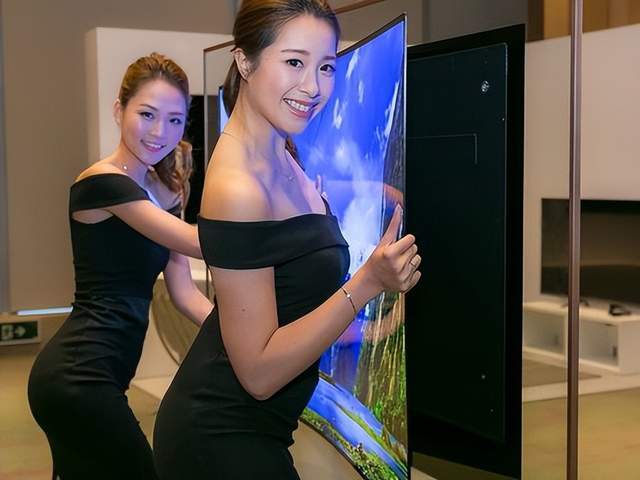
Third, the market isn't in the home turf. The main consumer market for OLED TVs is in Europe, America, and developed regions. In these places, LG and Samsung have strong brand appeal, and consumers recognize them. Chinese brands, on the other hand, haven't yet established influence in overseas high-end markets, and are sometimes limited by various non-technical factors. Looking at the first quarter data, LG's OLED market share in North America was 52.8%, in Europe 49%, in the Middle East and Africa 52.7%, and in Latin America 56.3%. The remaining share is mostly held by Samsung. Overseas high-end users simply prefer these two Korean brands.
So, is there still a chance for Chinese companies? Of course. Based on the path Chinese companies have taken in various industries over the past few decades, as long as we decide to enter the market, we often manage to drive down prices and seize market share. LCD TVs have followed a predictable path: from catching up to keeping pace, and then overtaking. OLED will likely follow the same route.
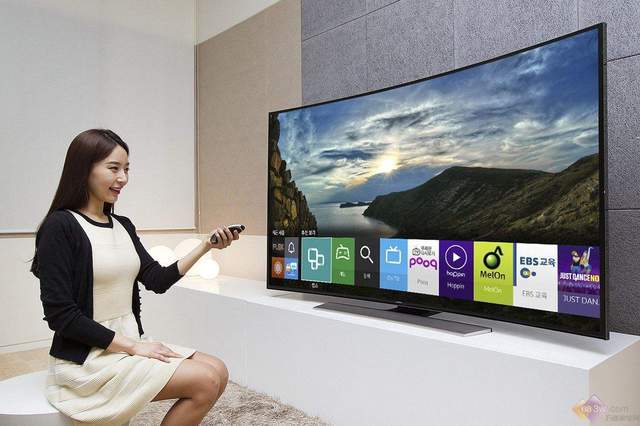
However, the core issue this time remains the screen itself. Domestic small-size OLED panels are already quite good; companies like BOE, CSOT, and Visionox have established themselves in flexible screens for smartphones and tablets. But in large-size OLED TV panels, there's still a significant gap compared to LG. If domestic large-size OLED panel manufacturers can't catch up quickly, no matter how hard Chinese brands try to produce complete TVs, they won't be able to bypass LG.
So ultimately, when Chinese brands can turn the tide in OLED TVs doesn't depend on how well we manufacture TVs, but on when our screen supply chain can recover. That day will definitely come, but it will take time.

Contact: Doris Chen
Phone: 18025359608
E-mail: sales@information-display.com
Whatsapp:0086-18025359608
Add: Floor 5, No. 1 bldg, Mingrenju Industrial Park, Rongyun Road, Kengzi Street, Pingshan District, Shenzhen, China