



sales@information-display.com
0086-755-26160419
ecently, Rockchip (603893.SH) has once again stepped into the spotlight. In a record of investor relations activities, the company clearly addressed several questions that outsiders frequently ask but often find difficult to fully grasp. You can view this disclosure as a roadmap—one that charts the course: the keys to winning, strategies for selling new products, reasons for inventory fluctuations, the rationale for continued heavy R&D investment, and the justification for stricter equity incentive criteria.
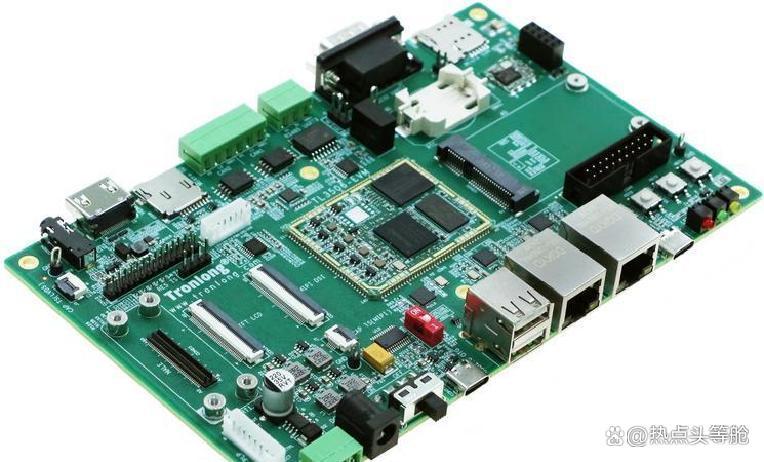
Let’s start with competitiveness. The company’s keywords are straightforward: a high-bandwidth, low-power coprocessor. They emphasize that this is an "industry-first" innovation designed for a practical, real-world scenario—deploying large models directly on edge devices. While the concept of "edge-based large models" might sound like science fiction to some, the essence is simple: models must run locally on smartphones, set-top boxes, cameras, and other terminal devices, rather than remaining confined to the cloud—no matter how "far ahead" that cloud technology might be. What are the biggest challenges for running these models at the edge? Excessive power consumption, insufficient bandwidth, and the risk of computing power upgrades lagging behind.
Rockchip claims its first-generation RK182X is at least a year ahead of the industry and that "there are currently no similar products on the market." It is worth noting that such statements are often "aggressive" in tone, but they reflect the company's belief that it is not competing on generic solutions; instead, it is creating hardcore designs optimized for edge-side efficiency. Crucially, the company highlighted a dual-track strategy involving SoCs and coprocessors: one track focuses on rapidly meeting demands for increased computing power, while the other aims to prevent conflicts between product iteration cycles and the pace of computing power upgrades. Think of it this way: some companies build only one road, so traffic jams force everything to a halt; Rockchip aims to open multiple lanes simultaneously, ensuring that the "computing power train" and the "product train" don't collide at the same intersection.
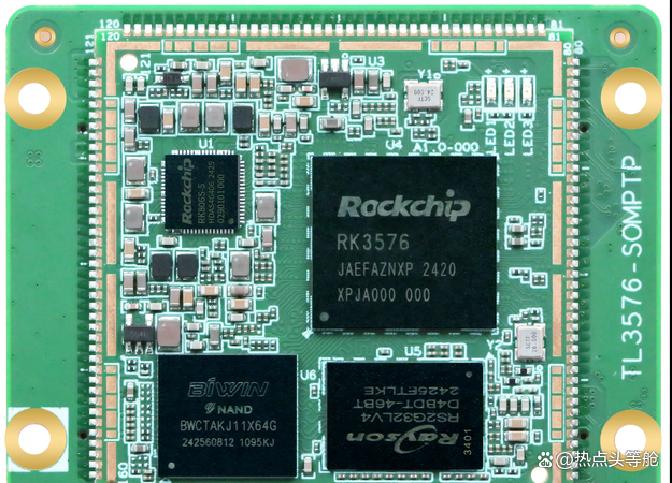
Having covered "how to win," the discussion turns to "how to bring new products to market." The RK3572 is a key focus in this disclosure. The company describes this as a next-generation mid-range AIoT platform, utilizing an advanced 8nm process and featuring a built-in 4 TOPS NPU. While these figures may seem unremarkable, their practical significance is straightforward: the NPU and manufacturing process determine whether a device can run AI applications cost-effectively while maintaining efficient power consumption. Consequently, its applications are deeply integrated into everyday life—ranging from tablets and mobile terminals to AI cameras, video analytics systems, NAS devices, retail equipment, and digital signage. These use cases share common requirements: the need for recognition, analysis, and on-device inference, alongside a high sensitivity to real-time performance and energy efficiency.
The company also emphasizes that the RK3572 is not a standalone product but part of a comprehensive lineup alongside the RK3588 and RK3576. This product matrix functions like a range of options tailored to different needs: some focus on high performance, others on stability and efficiency, and some on practical mid-range deployment. This makes market positioning easier to explain, as customer needs vary and market preferences shift over time. More pragmatically, the company is actively promoting the RK3572 across target markets and expects it to drive revenue growth by 2026. This establishes a clear timeline: the current launch marks the starting point for sales volume and market penetration, with results expected to materialize gradually in subsequent quarters.

The market often asks a critical question: will launching new products lead to a buildup of inventory? After all, the electronics industry is prone to a common issue—fluctuating orders that can easily leave companies saddled with excess stock. The company addresses this with a two-pronged strategy: increasing stock levels to match business expansion while simultaneously building up strategic reserves to mitigate the complexities of the current supply chain. In other words, the inventory increase is not indiscriminate; rather, the stock serves as a "safety buffer" to hedge against supply chain uncertainties.
As of the end of the first quarter of 2026, the company reported an inventory book value of RMB 1.304 billion, noting that overall levels remained within a normal range. It is important to note that the company’s rationale goes beyond simply stating that "inventory levels are fine"; instead, it links inventory fluctuations directly to business expansion and supply chain complexities. Investors typically focus on two key aspects: whether there is a significant trend of inventory deterioration and whether the pace of inventory levels aligns with shipment schedules. If the company can successfully convert orders generated by its promotional efforts into actual sales, the narrative surrounding its inventory levels will become more compelling; conversely, if conversion falls short of expectations, external observers will inevitably scrutinize more granular metrics to redefine what constitutes "normal levels."
Next is R&D investment. The company has clearly stated that R&D spending will continue to rise to maintain rapid iteration of its core technologies and product portfolio. While this may sound like a cliché, for a semiconductor company, it is a matter of survival. In a fast-paced industry, failing to invest is akin to stopping while running: you might think you are merely slowing down, only to realize that those ahead have left you far behind. Rockchip’s emphasis on "rapid iteration" aligns with the strategies mentioned earlier—specifically the co-processor approach, the dual-track strategy involving both SoCs and co-processors, and the continuous expansion of its product lineup.
Then there is the equity incentive plan. The information provided reflects a distinctively managerial perspective: the performance target for the year is a 20% year-over-year increase. The company explains that this target is set against a high baseline—following three consecutive years of rapid growth—and requires participants to exercise initiative and creativity to ensure the continued expansion of the company's operational scale.
Two key signals are embedded in this statement. First, the growth requirement is substantial; a 20% target is not merely for show. Second, the incentive structure goes beyond simple results-based metrics, emphasizing the need for participants to find solutions within a high-baseline environment rather than relying on the momentum of existing scale. What does the market fear most? It is not short-term volatility, but rather targets that are too easy—leading to complacency—or targets that are too demanding, causing teams to rush toward the finish line while neglecting long-term product quality and customer delivery. By linking the target to a high baseline and emphasizing "subjective initiative," Rockchip demonstrates that it has a clear internal assessment regarding its future growth trajectory.
When viewed together, these elements form a chain of cause and effect: the co-processor strategy and dual-track structure address efficiency issues regarding the deployment of large models at the edge; mid-range platforms like the RK3572 build out the AIoT portfolio, aligning promotional efforts with revenue growth; inventory stocking strategies act as a risk buffer; sustained R&D investment ensures uninterrupted technological iteration; and finally, rigorous equity incentive targets serve as a mechanism to ensure the sustainability of growth. External observers will inevitably ask: what specific metrics will ultimately validate claims like "a one-year lead," "no comparable products on the market," and "incremental growth by 2026"? Will it be shipment volumes, revenue composition, or gross margins? Will it be rising customer penetration or the conversion of orders within specific market segments? Regardless, the company’s core message in this disclosure is clear: it does not intend to remain merely a chip supplier. Instead, it aims to make "on-device AI deployment" its primary battleground, using its product ecosystem to decouple the conflicting demands of upgrading computing power and iterating products.
You can view Rockchip’s strategy as a "gear, training, and incentive" playbook. The "gear" consists of coprocessors and NPU platforms; "training" represents continuous R&D and rapid iteration; and "incentives" drive key personnel to push forward. Meanwhile, supply chain and inventory management act like pre-battle ammunition logistics—stocking up is necessary, but timing is everything. As for whether the projected 2026 growth materializes, success depends on whether the rollout is as seamless as opening a door to a lit room: the moment the door opens, the light comes on. Otherwise, no matter how beautiful the lightbulb is, it still needs power to shine.

Contact: Doris Chen
Phone: 18025359608
E-mail: sales@information-display.com
Whatsapp:0086-18025359608
Add: Floor 5, No. 1 bldg, Mingrenju Industrial Park, Rongyun Road, Kengzi Street, Pingshan District, Shenzhen, China